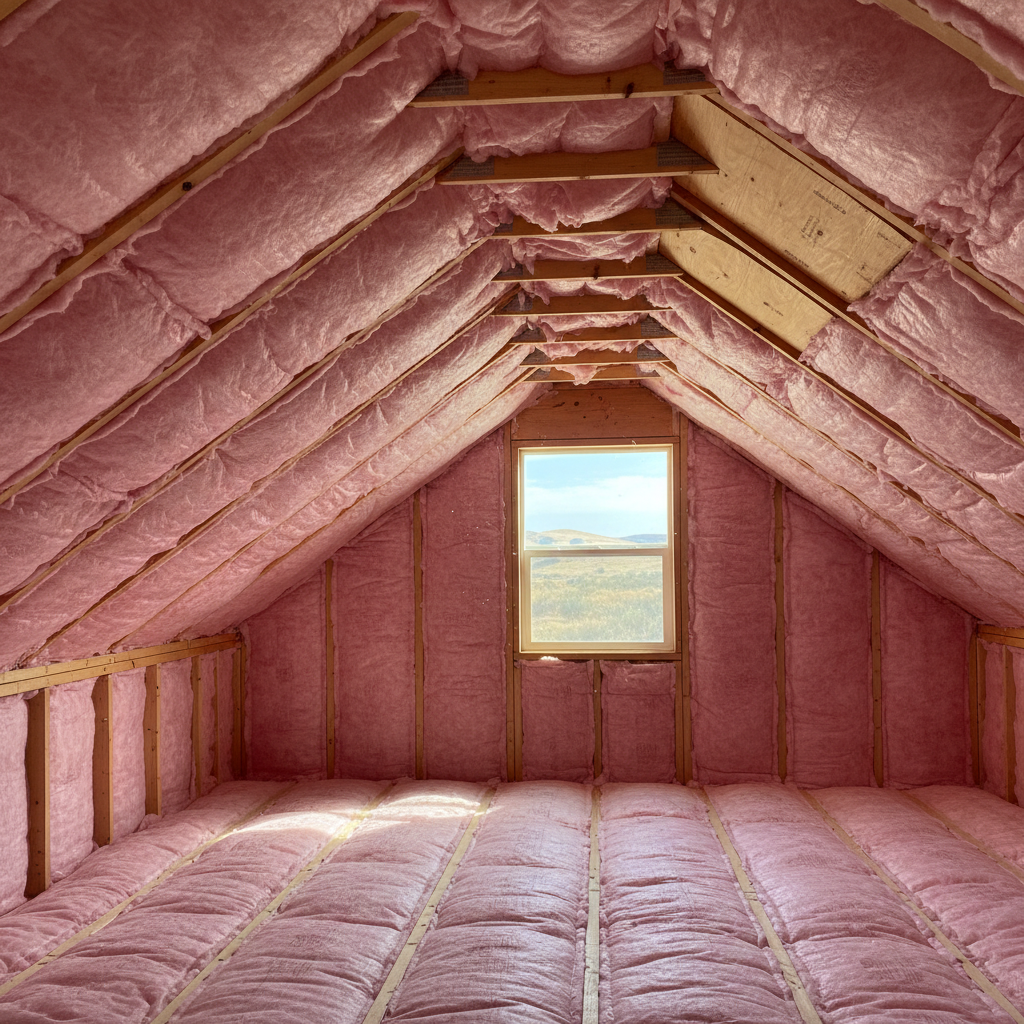
So, you're looking at batt insulation for your home here in Meridian. Maybe you've got an older place in the North End that's always drafty, or you're finishing a basement out in South Meridian and need to get it up to code. Either way, you're wondering what it's going to cost you. It's a fair question, and honestly, it's not as simple as a flat rate per square foot, but I can give you some solid numbers and what to look out for.
What Drives the Price Tag?
A few big things are going to impact what you pay for batt insulation. It's not just the material itself; it's the labor, the difficulty, and even the type of batt you choose.
- R-Value: This is probably the biggest factor. R-value is how well the insulation resists heat flow. Higher R-values mean thicker batts and better performance, which naturally costs more. For attics, you're often looking at R-38 to R-60. Walls might be R-13 or R-19.
- Material Type: Fiberglass is the most common and usually the cheapest. Mineral wool (rock wool) is a bit more expensive but offers better fire resistance and sound dampening. Cotton or denim batts are eco-friendly but typically cost more than fiberglass.
- Accessibility: This is a huge one for labor costs. Is it an open wall in new construction? Easy. Is it an old attic with limited head space, tons of old junk, and a million wires to work around? That's going to take more time and effort, and you'll pay for it. Crawl spaces can be particularly tricky, especially if it's a tight squeeze or there's existing debris.
- Removal of Old Insulation: If we have to tear out old, dirty, or damaged insulation, that's an additional cost. We have to bag it up, haul it away, and dispose of it properly. You don't want to just layer new stuff over moldy or rodent-infested insulation.
- Square Footage: Obvious, right? More area to insulate means more material and more labor.
- Local Labor Rates: Meridian's a growing town, and good labor isn't cheap. We pay our guys well because they do good work.
Typical Cost Ranges for Batt Insulation in Meridian
Alright, let's get down to some numbers. Keep in mind these are averages, and your specific project might be higher or lower depending on those factors I just mentioned.
- Basic Fiberglass Batts (R-13 to R-19 for walls): You're generally looking at around $0.80 to $1.20 per square foot for material and installation. This is for standard 2x4 or 2x6 wall cavities.
- Higher R-Value Fiberglass Batts (R-38 to R-60 for attics): For attics, where you need a lot more R-value, expect to pay anywhere from $1.50 to $2.50 per square foot. This can vary quite a bit based on how thick we need to go and how much existing insulation is there.
- Mineral Wool Batts: If you're going with mineral wool for better soundproofing or fire resistance, you might see prices in the range of $1.50 to $2.50 per square foot, depending on the R-value.
- Insulation Removal: If we're hauling out old insulation, that's often an additional charge, typically around $0.50 to $1.00 per square foot, sometimes more if it's contaminated or particularly difficult to remove.
So, for a 1,500 sq ft attic needing R-38 fiberglass, you might be looking at $2,250 to $3,750. If you also need old insulation removed, add another $750 to $1,500 on top of that. For 1,000 sq ft of wall space with R-13 fiberglass, it could be $800 to $1,200.
What Should a Good Quote Include?
When you get a quote from us or any other reputable company, it should be clear and detailed. Don't accept a scribble on a napkin. Here's what you should expect:
- Detailed Scope of Work: Exactly what areas are being insulated (e.g.,